
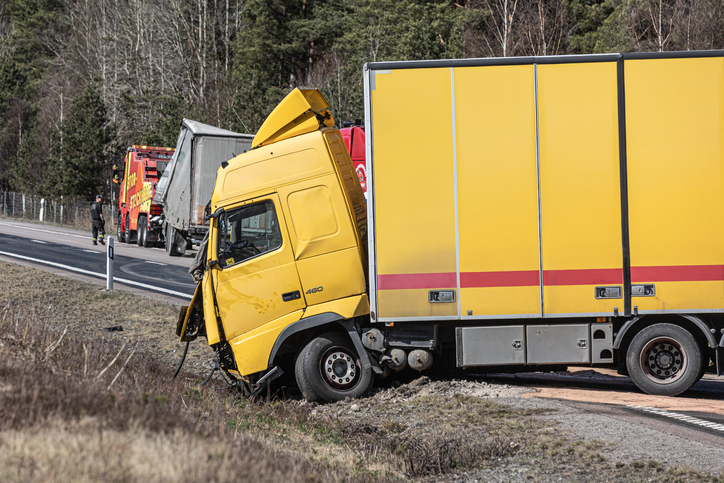
Negligence in truck accident cases involves showing how truck drivers and trucking companies hurt you because they failed in their duty to exercise reasonable care to avoid causing harm. Whether they were careless or acted intentionally, you have the right to seek compensation by presenting evidence of negligence in an insurance claim or personal injury lawsuit.
A Greenville truck accident lawyer from Smith Jordan Law understands that many people have questions about what negligence is and how we demonstrate it. The specifics will depend on your situation, but we want to provide you with as much background information as possible.
What does negligence mean under South Carolina law?
According to the Legal Information Institute, someone is negligent when they fail to take the steps a reasonable person would to avoid hurting others. For truck accidents, this means the driver should follow traffic laws, inspect their vehicle, and avoid actions that increase the risk of a crash.
Negligence involves four elements:
- Duty of care to avoid causing harm
- Breach of duty from carelessness or intent
- Causation when the breach causes you harm
- Damages that you collect from the at-fault party
If your truck accident attorney can show that the truck driver or other party failed to meet that duty of care, you can establish negligence and request payment for your damages.
How can a truck driver be negligent?
A truck driver could be negligent in any of the following ways:
- Drunk driving
- Driving under the influence of drugs
- Distracted driving
- Exceeding the Federal Motor Carrier Safety Administration (FMCA)’s hours of service regulations
- Not keeping a proper lookout
- Speeding
Truck driver negligence from alcohol use resulted in 19.4% of fatal vehicle accidents in 2023, according to a report from the National Highway Traffic Safety Administration (NHTSA). In South Carolina, commercial trucks were involved in 8.1% of all traffic fatalities for that same year.
Can a trucking company be responsible for a truck accident?
Yes- a trucking company is normally vicariously liable for the actions of its driver. A trucking company can also be directly responsible for a truck accident when it doesn’t properly maintain its vehicles, fails to train its drivers, or hires drivers with poor driving records. In addition, other parties could be at fault, such as the cargo loading company or the truck manufacturer.
What evidence helps prove negligence in a truck accident case?
Important evidence in truck accident claims might include witness statements, video footage, photographs, police reports, an accident reconstruction analysis, and expert testimony.
Gathering this evidence takes time, so contact an attorney soon after your crash. The South Carolina statute of limitations requires you to file your case within certain timeframes, or you lose your right to sue.
How do insurance companies respond to truck accident claims?
Insurance companies may try to avoid paying claims for truck accident cases by insisting you were at fault or that their driver wasn’t to blame. They may try to offer you too little or even deny your claim. You need experienced guidance to negotiate a fair settlement.
Why does proving negligence matter in a truck accident claim?
Our state uses a modified comparative negligence model, described in South Carolina Code Section 15-38-15 (2025). This means that more than one party can be held liable for your damages, although it also includes limitations for you as the plaintiff.
If you’re 51% or more to blame, you can’t seek compensation. However, you have the right to bring a claim against the truck driver, the trucking company, and any other entity that contributed to the accident.
Talk to a Greenville truck accident lawyer about your case
If you’ve been hurt by a commercial truck and need help handling your personal injury claim, the Greenville truck accident lawyers at Smith Jordan Law are ready to help. We are committed to seeking the maximum compensation available, and we’re not afraid to go to trial for you.
We stand up to big trucking companies to secure justice for you and your loved ones. To learn more about how we will put your interests first and treat you like more than a case number, contact us today to arrange a free case evaluation by calling (864) 343-2222.