
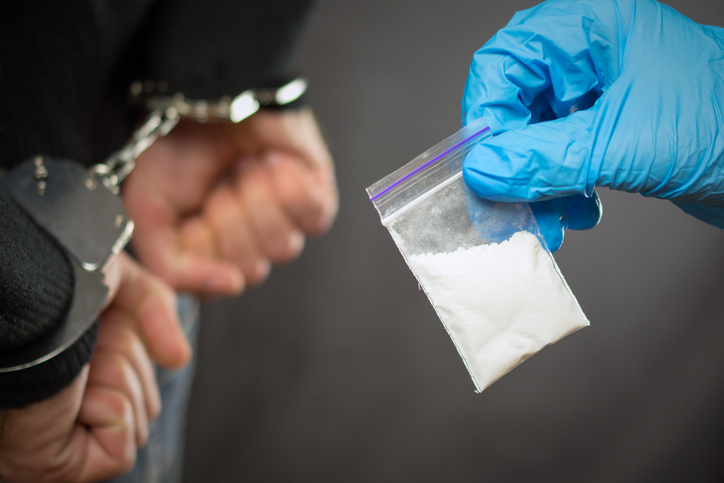
You may be able to beat a drug possession charge by challenging the evidence, disputing constructive possession, or raising defenses like lack of knowledge or entrapment. The right approach depends on the facts of your case and how strong the state’s evidence actually is. A Greenville criminal law attorney at Smith Jordan Law can look closely at what happened and explain what your options are.
What does the prosecution have to prove in a drug possession case?
To convict you, the prosecuting attorney must prove beyond a reasonable doubt that you committed each element of the crime. That means showing that the substance is a positively identified illegal drug, that you actually or constructively possessed it, and that you did so knowingly and intentionally.
If the state cannot prove all three elements, your attorney may be able to have the charge reduced or dismissed entirely. Your criminal defense attorney will look for weaknesses in the state’s case and build a strategy around what the facts actually show.
What is constructive possession, and why does it matter?
Constructive possession is a legal doctrine that allows the state to charge you with drug possession even if the drugs were not found on your person. As long as you had knowledge of and control and dominion over the area where the drugs were found, like your home or vehicle, the prosecution can argue possession.
This matters because you can face a drug offense charge without ever having touched the controlled substance. Your attorney can challenge whether you truly had knowledge of and control over the drugs, which is an important part of fighting constructive possession claims.
When can evidence be challenged or ruled inadmissible in court?
Part of what your criminal defense attorney does is file motions to challenge evidence and request that it be ruled inadmissible in court. There are several common grounds for these challenges.
One is an unlawful traffic stop or search. Law enforcement must have a lawful reason to stop you or search your home or vehicle. If that stop or search violated your Fourth Amendment rights, your attorney can move to have the evidence obtained thrown out.
Another is the chain of custody or lab analysis problems. If the substance was not handled, stored, or analyzed correctly, that creates doubt about whether the evidence is reliable. Your attorney can challenge how it was processed at every step.
A third is hearsay or prejudicial evidence. If evidence is based on out-of-court statements or is unfairly prejudicial to your character, your attorney can move to have it excluded under the South Carolina Rules of Evidence.
How do defenses like lack of knowledge or entrapment apply?
If someone hid drugs in your vehicle or home without your knowledge, your attorney can argue lack of knowledge. The same applies if you had no access to or awareness of where the controlled substance was found. Because knowing and intentional possession is an element the state must prove, showing you did not know the drugs were there can be a strong defense.
Entrapment is a different defense. It applies when law enforcement induced you to commit a drug offense that you were not predisposed to commit. Your attorney must show both that the officer’s conduct crossed the line and that you had no prior inclination to possess the illegal drugs in question.
What role does the chain of custody play in a drug possession case?
When officers collect a substance during a drug offense arrest, it passes through multiple people before it becomes evidence in your case (officers, lab technicians, evidence clerks, and others). At each stage, there is a chance for mishandling, mislabeling, or tampering.
Your criminal defense attorney can examine the chain of custody for any breaks or errors. Something as simple as a missing signature, a gap in documentation, or an unsigned timestamp can give your attorney grounds to file a motion to suppress that evidence. Even a small error in the process can carry real weight in your defense.
Can drug possession charges be reduced or dismissed?
Depending on the evidence, it is possible to get charges reduced or dismissed. For example, if the charge is possession with intent to distribute under South Carolina Code § 44-53-370, but the amount is less than the threshold weight for that substance, your attorney may be able to request a dismissal or negotiate a plea down to simple possession. Your criminal history, the strength of the evidence, and the facts of the case all play a role in what outcomes are available.
What should you do if you are facing a drug possession charge?
First, remain silent and ask for your attorney. Do not answer questions or try to explain what happened until you speak with a lawyer. Anything you say can be used against you, and trying to talk your way out of the situation often makes things worse.
Cooperate with the booking process, but stay calm and quiet until your attorney arrives. Save any paperwork you receive. Write down everything you remember about the stop, the arrest, the tests, and what law enforcement said or did. Do not post anything about the case online.
Talk to a Greenville criminal law attorney about your situation
A drug possession conviction in South Carolina can have long-term effects on your freedom, your future, and your ability to earn a living. You do not have to face this alone. At Smith Jordan Law, when you come in, you sit down with a lawyer who will look honestly at your case and explain your options.
If you are facing a drug possession charge in Greenville, Easley, or the surrounding area, call us at (864) 343-2222 or contact us online to schedule a free consultation.